Healthy eating doesn't have to be complicated. With so much conflicting nutrition advice, it's easy to feel overwhelmed by what you should eat, what you should avoid, and which diet is best.
But building a strong nutrition foundation doesn't require strict meal plans, eliminating entire food groups, or counting every calorie.
It starts with whole foods, balanced meals, and small, consistent choices that support your health, energy, and fitness goals.

One of the simplest ways to improve your nutrition is to prioritize whole and minimally processed foods.
These foods are close to their natural form and often provide valuable nutrients, including fiber, protein, vitamins, and minerals.
One of the biggest benefits of eating more whole foods is that they can help you feel fuller and more satisfied, making it easier to manage your appetite without constantly counting calories. Many whole foods are naturally rich in fiber, water, and protein, which help promote fullness and keep hunger at bay. For example, a meal with lean protein, vegetables, and whole grains may leave you feeling more satisfied than a similarly sized meal made primarily from highly processed foods. That doesn't mean you can't overeat healthy foods or that portions don't matter. But when you focus on nutrient-dense, minimally processed foods, you're giving your body the nutrients it needs while making it easier to recognize and respond to your natural hunger and fullness cues.
Freezing, cooking, canning, and pasteurizing are all forms of processing. Frozen vegetables, canned beans, Greek yogurt, and canned tuna can be nutritious and convenient choices.
The goal isn't to eliminate packaged foods. It's to build more of your meals around nutrient-dense ingredients while still enjoying the foods you love. Paying attention to additives, sodium, and added sugar when shopping is key.
A simple approach to eating more balanced meals is the balanced plate method:
This is a flexible guide. Your portions may vary based on your activity level, training goals, and individual needs.
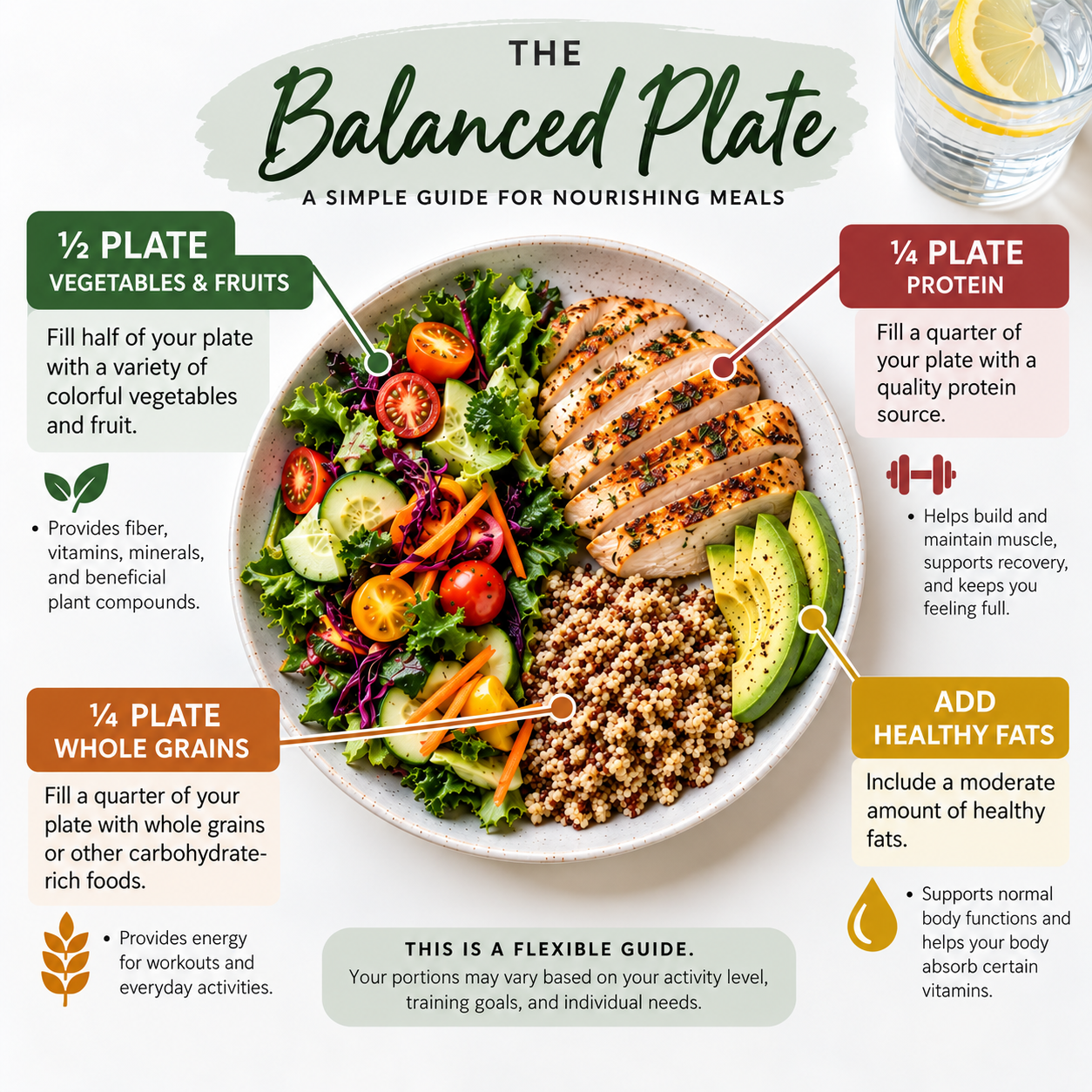
Protein supports muscle maintenance and recovery, especially important when strength training.
Carbohydrates provide energy for workouts and everyday activities.
Healthy fats support normal body functions and help your body absorb certain vitamins.
Fruits and vegetables provide fiber, vitamins, minerals, and beneficial plant compounds.
Maybe that means adding protein to breakfast, including another vegetable at dinner, or choosing a whole-food snack.
Our daily challenge habits—Prioritize Protein, Eat Your Colors, Plan Ahead, Move for 30 Minutes, and Stay Hydrated—are designed to help you put these principles into practice.
You don't need to change everything at once. Start small, stay consistent, and build from there!
One of the biggest challenges with healthy eating is figuring out what to eat when life gets busy.
That's why Plan Ahead is one of our daily challenge habits!
Planning doesn't require hours of meal prep. It can be as simple as:
Just a few minutes of preparation can make healthier choices easier throughout the week.
One meal doesn't determine your health, and one challenging day doesn't erase your progress.
You can enjoy dinner out, celebrate special occasions, and eat your favorite foods while still building healthy habits.
Instead of asking whether you ate perfectly today, ask yourself:
“Did I make at least one choice today that supports my goals?”
Small choices, repeated consistently, are what create lasting change.
This article is intended for general nutrition education and is not a substitute for individualized medical or dietary advice.
Disclaimer: Non-Medical Nutritional Guidance
The information provided in this consultation, blog article, and website, including any nutritional and fitness guidance, is for general informational purposes only and is not intended as a substitute for professional medical advice, diagnosis, or treatment. I am not a licensed medical professional, registered dietitian, or nutritionist.
Please consult with your healthcare provider or a qualified medical professional before starting any new diet, exercise program, or nutritional regimen. It is your responsibility to work directly with your healthcare provider to ensure that the advice or information provided is safe and appropriate for your specific needs and health conditions.
By choosing to act on any information provided without prior approval from your healthcare provider, you acknowledge and agree to assume full responsibility for your decisions and actions. Under no circumstances shall Tribal Fitness, Inc., it's employees, or contractors be held liable for any loss, damage, or injury resulting from the use of the information provided.