
The time and effort you put into your workouts are important, but what you eat plays an equally important role in how your body performs, feels, and recovers.
Whether your goal is to build muscle, improve body composition, burn fat, increase your energy, or simply feel better throughout the day, proper nutrition helps support your progress both inside and outside the gym.
And here's something worth remembering: Food isn't just about calories. It's fuel for everything your body does.
Understanding how protein, carbohydrates, and fats work together can help you make more informed food choices, fuel your workouts effectively, and support muscle recovery.
The good news? You don't need a complicated meal plan, restrictive diet, or perfect eating habits to get started. A few practical nutrition principles can make a meaningful difference.
You've probably heard people talk about "macros," especially when discussing fitness and nutrition.
Macronutrients are the three major nutrients that provide our bodies with energy: protein, carbohydrates, and fats.
Each plays a different role, and all three contribute to a balanced eating pattern.
Rather than thinking of one macronutrient as more important than the others, focus on how they work together to support your health and fitness goals.
Want to learn more about macros? We've covered the fundamentals in a previous article, including how protein, carbohydrates, and fats contribute to your daily calorie intake and how to calculate your macros based on your goals.
Read More: The Basics of Nutrition — Understanding Macros
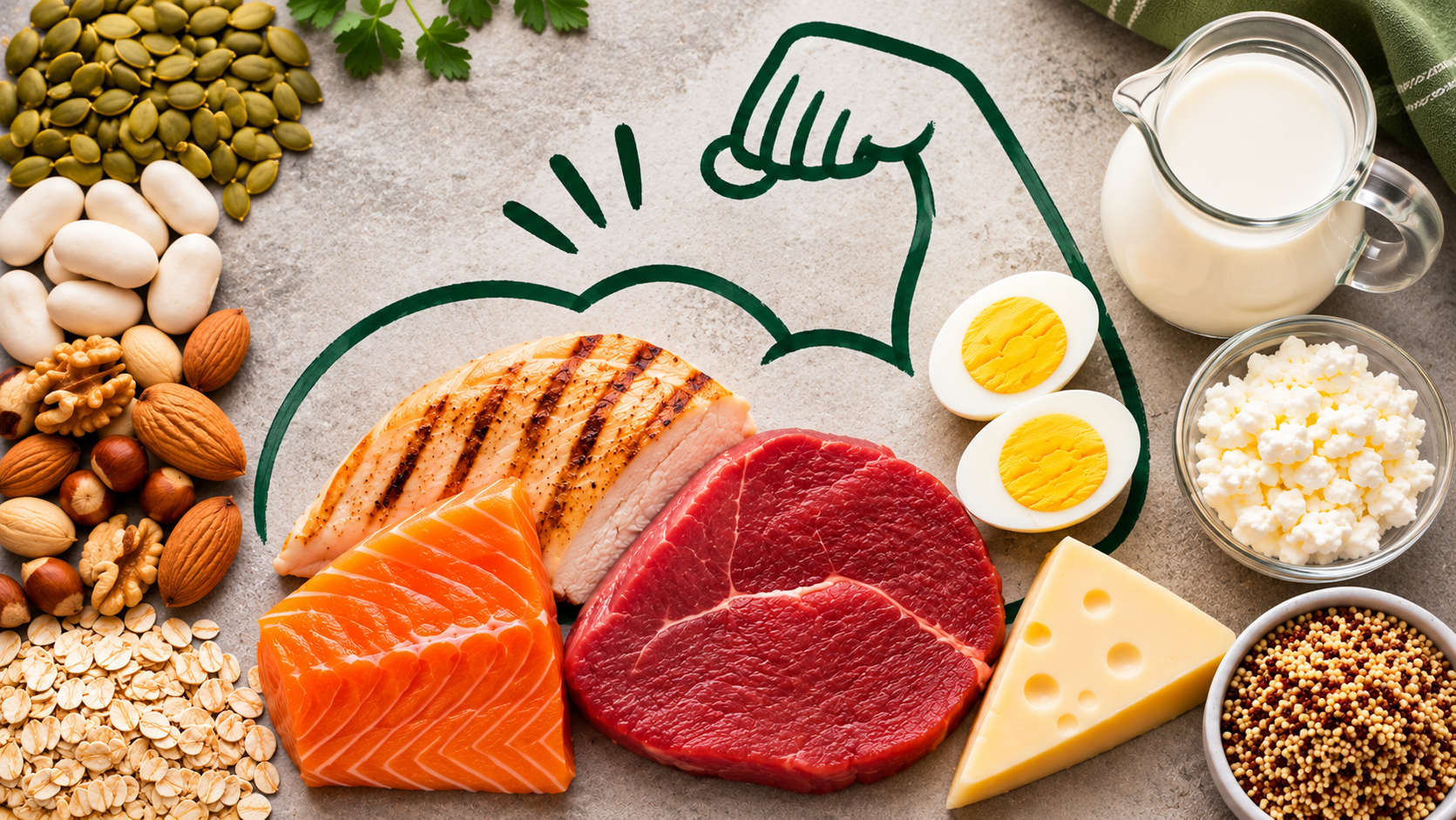
Protein is especially important for anyone participating in strength training.
When you exercise, your muscles experience stress that stimulates the body's repair and adaptation processes. Consuming adequate protein provides the amino acids needed to support muscle recovery, maintenance, and growth.
Protein also helps promote fullness, making it an important part of satisfying meals.
Protein needs vary depending on body weight, activity level, age, and individual goals.
For many healthy adults who regularly strength train, a commonly recommended range is approximately 1.4–2.0 grams of protein per kilogram of body weight per day, or about 0.6–0.9 grams per pound.
For example, someone weighing 150 pounds might aim for approximately 95–135 grams of protein daily, depending on their training and goals.
This is a general reference range, not a requirement for everyone. Individual needs may differ, particularly for those with certain medical conditions.
You don't have to consume all your protein at once. Spreading protein across meals can make meeting your daily needs more manageable.
Easy protein sources include:
Instead of eating very little protein at breakfast and most of it at dinner, try including a meaningful protein source with each main meal.
Here's an example of how someone might reach approximately 110 grams throughout the day:
Carbohydrates sometimes get a bad reputation, especially when people are trying to lose weight.
But carbohydrates are an important energy source, particularly for moderate- to high-intensity exercise.
Your body breaks down carbohydrates into glucose, which can be used for energy or stored in your muscles and liver as glycogen.
During strength training and other demanding workouts, those glycogen stores help provide fuel.
Nutritious carbohydrate sources include:
Choosing fiber-rich carbohydrates regularly can also support digestion and help you feel satisfied.
The goal isn't to avoid carbohydrates. It's to choose appropriate amounts and types that support your activity level and individual needs.
Dietary fat is another important nutrient that sometimes gets unnecessarily avoided.
Fats support cell structure, normal hormone production, and the absorption of fat-soluble vitamins A, D, E, and K.
They also contribute flavor and satisfaction to meals.
Sources of primarily unsaturated fats include:
Because fats are more calorie-dense than protein or carbohydrates, portions can make a difference when managing overall energy intake.
But that doesn't mean they should be eliminated. Including moderate amounts of nutritious fats is part of a balanced eating pattern.
What you eat around your workouts can influence how energized you feel during training and how well you support recovery afterward.
You don't need a complicated meal plan or expensive supplements. A few practical choices can make a difference.
If you're training early in the morning, you might not have the appetite or time for a full breakfast.
That's okay!
A small, easy-to-digest carbohydrate snack may be enough to provide some energy before your workout, especially if you plan to eat a balanced meal afterward.
Simple pre-workout options include:
If you have more time before training, a small meal containing both carbohydrates and protein may be a good option.
Some people feel comfortable training without eating beforehand, particularly for shorter sessions. Others perform better with a little fuel. Pay attention to your energy levels, digestion, and workout intensity to find what works for you.
After training, your body benefits from nutrients that support muscle repair and replenish energy stores.
Protein helps support muscle recovery, while carbohydrates help replenish glycogen used during exercise.
Some easy post-workout meal ideas include:
For many people, eating a balanced meal within a few hours after training is a practical approach. You don't need to rush to drink a protein shake immediately after your final set.
Your overall daily nutrition matters more than hitting an exact post-workout minute.
Tracking macronutrients can be a useful tool for people with specific nutrition or fitness goals, but it isn't necessary for everyone.
If tracking feels overwhelming, start with the balanced plate method we discussed in Week 1.
Build meals around a quality protein source, include colorful vegetables and carbohydrate-rich foods, and add moderate amounts of healthy fats.
You can also use simple habits like including protein at breakfast, choosing fiber-rich carbohydrates, and planning balanced meals ahead of time.
You don't have to count every gram to improve the quality of your nutrition.
If you're curious about your individual calorie and macronutrient needs, we've made it easy to get started!
Visit our Macro Calculator to estimate your daily protein, carbohydrate, fat, and calorie targets based on your goals and activity level.
Not sure where to start or how to interpret your results? Reach out to us at Tribal Fitness! We're happy to help you evaluate your estimated needs, discuss your goals, and develop a practical approach that fits your lifestyle.
Remember, these calculations are starting points, not rigid rules. Your individual needs may vary, and you don't have to track every gram to make meaningful progress.
This week, pay a little more attention to how your food choices support your workouts, energy, and recovery.
Try including protein with each main meal, choosing carbohydrates that support your activity level, and experimenting with a simple pre- or post-workout snack.
Continue tracking your daily habits and water intake in the Tribal Fitness app.
And remember, nutrition isn't about eating as little as possible. It's about giving your body what it needs to feel good, perform well, and recover.
Eat to support your strength, energy, and long-term health — not just a number on the scale.